test
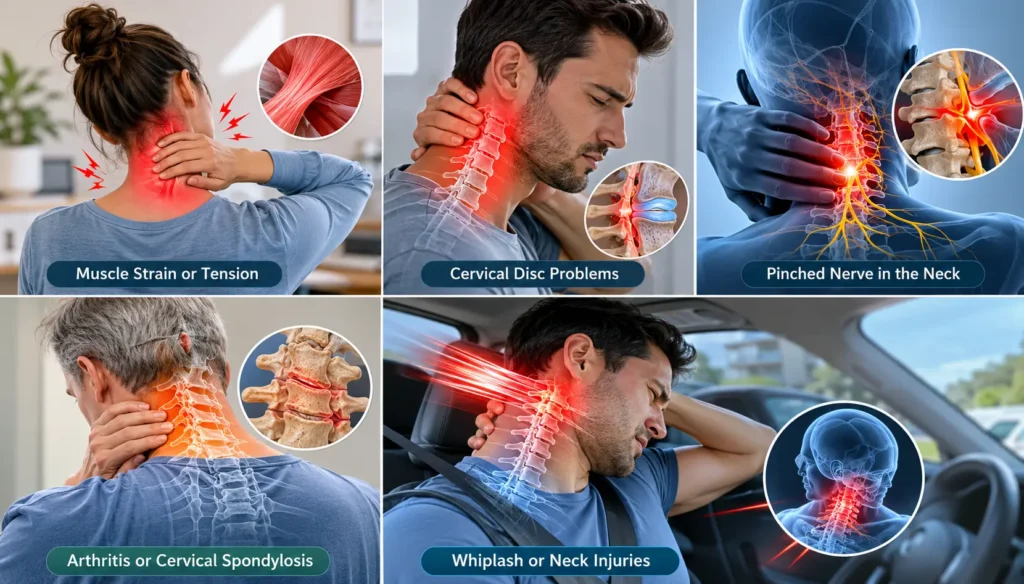
Muscle Strain or Tension
This is one of the most common causes of neck pain when turning the head. Muscle strain can develop from everyday habits and repetitive movements that place stress on the neck muscles and ligaments.
- Prolonged poor posture (especially from desk work or phone use)
- Sudden, awkward movements
- Stress and muscle tension accumulation
- Sleeping in an unusual position
- Overuse during sports or physical activities
This often leads to:
- Neck stiffness
- Soreness
- Tight muscles
- Pain while turning the head
Cervical Disc Problems
The cervical discs act as cushions between the bones in the neck. When a disc becomes damaged or begins to wear down, it may irritate nearby nerves and cause pain during movement.
Cervical disc problems may occur due to:
- Herniated or bulging discs
- Age-related disc degeneration
- Repetitive strain on the neck
- Previous neck injuries
Common symptoms include:
- Pain spreading to the shoulders or arms
- Tingling or numbness
- Weakness in the arms or hands
- Difficulty moving the neck left or right comfortably
Pinched Nerve in the Neck
A pinched nerve occurs when surrounding tissues place pressure on a nerve in the cervical spine. This can cause sharp pain and neurological symptoms that worsen with certain neck movements.
A pinched nerve may develop due to:
- Herniated cervical discs
- Bone spurs from arthritis
- Spinal narrowing (stenosis)
- Repetitive neck strain
- Neck injuries or inflammation
This condition may cause:
- Sharp neck pain when turning the head
- Burning or shooting pain
- Tingling sensations in the arms or hands
- Numbness
- Muscle weakness
- Pain radiating to the shoulders
Arthritis or Cervical Spondylosis
Cervical spondylosis is an age-related condition that affects the joints, discs, and bones in the neck. Over time, wear and tear can reduce flexibility and cause chronic discomfort.
This condition commonly develops due to:
- Natural aging
- Degeneration of spinal discs
- Joint wear and tear
- Long-term poor posture
- Repetitive neck stress
Symptoms may include:
- Chronic neck stiffness
- Grinding or clicking sensations
- Reduced neck mobility
- Headaches originating from the neck
- Ongoing discomfort during daily activities
Whiplash or Neck Injuries
Sudden trauma can strain or damage the muscles, ligaments, and joints in the neck. Whiplash injuries are especially common after car accidents or sports-related impacts.
Neck injuries may occur due to:
- Car accidents
- Sports injuries
- Falls or sudden impacts
- Sudden jerking movements
- Physical trauma to the neck
These injuries often lead to:
- Severe neck stiffness
- Pain when moving the neck
- Muscle spasms
- Headaches
- Shoulder pain
- Reduced range of motion
- Persistent soreness after injury
How Neck Rotation Actually Works
To understand neck pain during rotation, it helps to know the anatomy involved.